
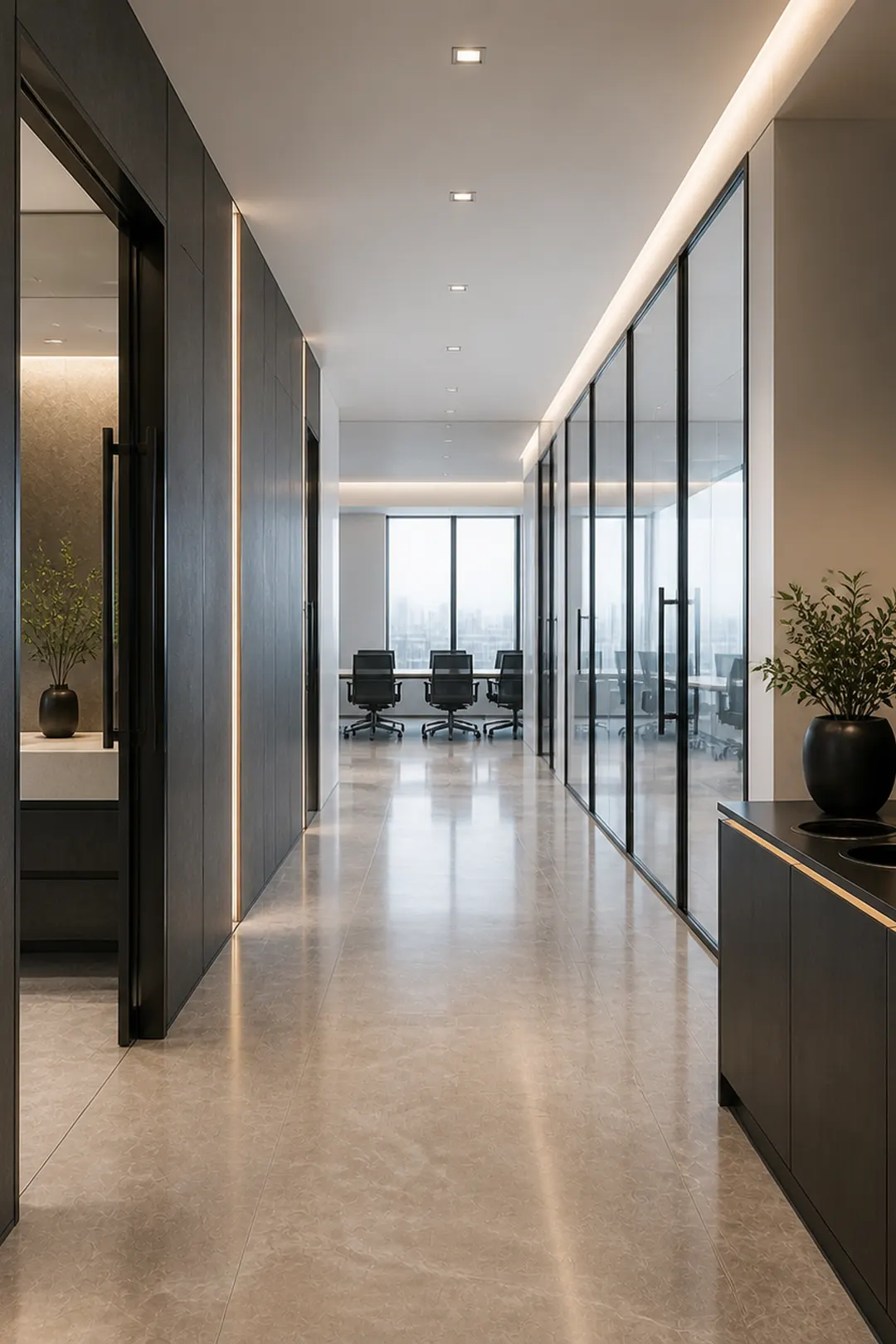
Medical Office Cleaning
Medical office cleaning in Pleasanton and the Tri-Valley
Waiting rooms, exam rooms, offices and restrooms cleaned for Tri-Valley medical practices, with clinical rooms handled under your written protocol.
Waiting rooms first, clinical areas by protocol
Patients form an impression in the reception and waiting areas, so those rooms get steady attention: high-touch surfaces, floors and the restrooms nearby. Administrative offices, hallways and breakrooms follow a schedule suited to staff work, often after the office closes or during a quieter part of the day.
Exam and procedure rooms are cleaned to the practice’s written protocol, which sets the products, sequence and handoff for each room, and terminal cleaning is done whenever you book it. Crews working in those rooms are trained in bloodborne-pathogen safety and HIPAA-aware conduct. Medical facilities in Dublin and elsewhere in the Tri-Valley can combine this with day porter service for waiting rooms and restrooms that stay busy while the office is open.
Practice layouts across Pleasanton and San Ramon
Medical offices in Pleasanton and San Ramon range from single-provider suites to practices that share a building with other tenants. A smaller suite might combine reception, a few exam rooms and one restroom, while a larger practice adds several waiting areas, staff workrooms and longer hallways. The room list reflects that layout, with each area marked as routine or protocol-driven.
Hard floors in hallways and restrooms move into periodic floor care, and carpeted waiting rooms or administrative offices can add carpet extraction on an evening when the office is closed.
Choosing a frequency for a practice
Patient traffic drives the schedule. Waiting rooms, reception counters and patient restrooms collect the most use and come up on every visit, while back offices and staff breakrooms follow a lighter rotation.
Practices with long clinic days can pair the after-hours clean with midday porter checks of restrooms and waiting rooms, keeping the patient-facing rooms presentable until the last appointment.
Medical office cleaning costs in Pleasanton
Published 2026 market data puts medical office cleaning 20% to 50% above standard office cleaning. With Pleasanton offices at $0.16 to $0.24 a square foot monthly, medical offices commonly run about $0.19 to $0.36. The difference reflects disinfection of high-touch surfaces, more detailed restroom care and exam-room work that follows the facility’s written protocol. Waiting rooms and check-in counters see steady patient traffic through the day, and each included room carries its own task list and timing, so a medical plan takes more planning and more crew time per foot than an office of the same size. Administrative offices within the practice sit closer to the office band.
Consider a 6,500-square-foot multi-provider Pleasanton office with a waiting room, check-in desk, eight exam rooms, staff offices and four restrooms. Cleaned five evenings at $0.29 per square foot, the plan runs $1,885 a month. A practice with Saturday clinics adds a visit. The walkthrough confirms each included area and its tasks before pricing.
A few useful answers
Common questions.
Which rooms does medical office cleaning cover?
Reception and waiting areas, exam and procedure rooms, offices, hallways, restrooms and breakrooms, each on the checklist with its own tasks.
Can you clean once our last patient leaves?
Yes. Service can take place after the office closes or in a quieter window that suits patients and staff.
Can waiting rooms get attention during office hours?
Yes. Day porter support can cover waiting areas and restrooms while the office is open, with full cleaning after hours.
Whose disinfectant list does the crew follow in exam rooms?
The products your practice’s written protocol names, used in the order it sets for each room. Each one is EPA-registered and left on the surface for its label dwell time.
How is patient privacy protected while the crew works?
Every crew member is background-checked and works without reading or moving patient records. Cleaning runs after the office closes or in quiet windows, and rooms you mark as restricted, such as records storage, stay closed to the crew.
What visit schedule suits a Tri-Valley medical practice?
Waiting rooms, reception and patient restrooms come up on every visit, while back offices follow a lighter rotation, with each frequency set during the walkthrough.
Will your crew handle a terminal clean of a procedure room?
Yes, when you book it. The room is cleaned top to bottom in the sequence your protocol sets and handed back ready for the next patient.
Services
Related services
Industries
Related industries
Resources